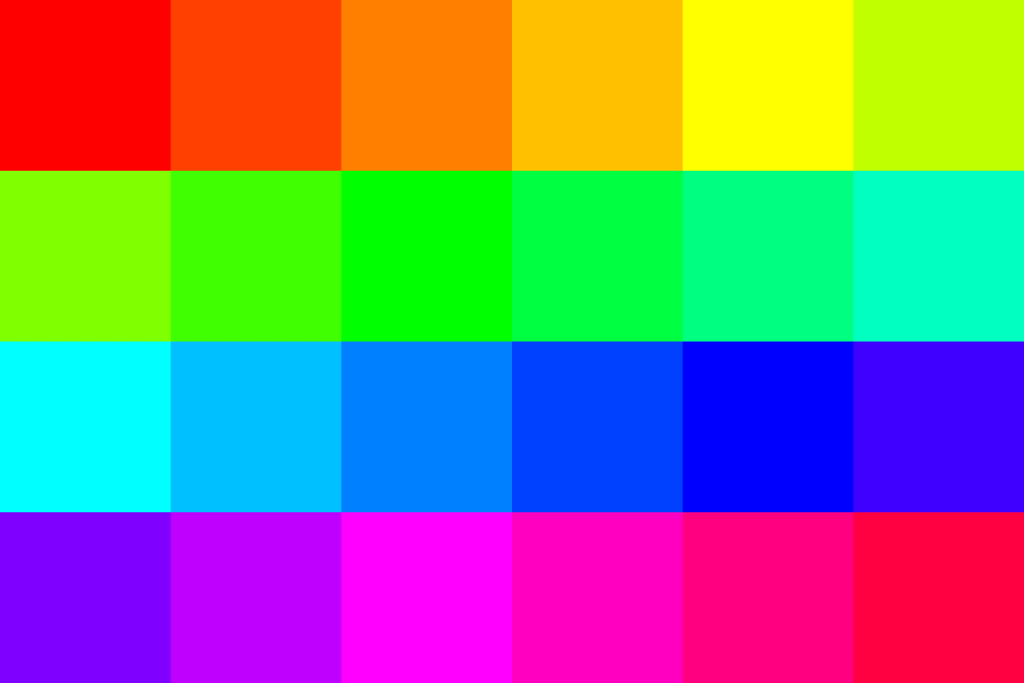
Each pixel on our screen emits a certain number of colors that are dependent upon the RGB values. A RGB value is the amount of red, green, or blue displayed in a color. The bit depth of our digital devices allows for more colors to be seen the greater the bit depth is. Back in the day, when devices had 8-bit depth, they would only be able to display 256 colors. Now with modern technology, some devices have 24-bit depth which displays an astounding 16,777,216 colors. This is more color than the human eye can perceive. Indexed color is a way to display images using reduced colors. You also save storage space by using indexed colors. A popular example of indexed colors is pixel art. This is art that has been made with a restricted color palette and is ideal if you want to make a retro design. 24-bit digital images are the opposite of indexed colors as they display 16,777,216 colors. Some examples of these are JPEG’s or modern computer displays. Reflective color ink is much different than how we get color on our digital devices. Starting off with how it is used, reflected color ink is used for clothing, signs, packaging, and even is used with printing currency. The reflected color ink works with light waves to reach your eyes. The ink uses pigments and dyes to absorb wavelengths of light. This method provides an interesting and eye-catching way of displaying colors.